|
Better life safety at sea - Emergency Position-Indicating Radio Beacon
5/23/2014 |
|
|
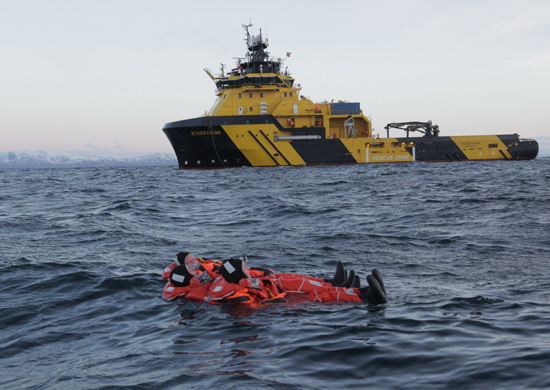
A new EPIRB (Emergency Position-Indicating Radio Beacon) makes it easier to locate people in distress at sea. The beacon is developed and manufactured in Norway.
- The new distress radio beacon takes cross-bearings from multiple systems. Several vessels can participate in search and rescue, and locating survivors becomes a lot more probable, says section leader Knut Asle at Hansen Protection in Moss.
The company has developed the new emergency beacon that will initially be fitted into survival suits worn by workers on offshore oil installations. Over time, anyone who works in vulnerable conditions at sea, such as fishermen or people working on offshore wind turbines, can have the emergency locator fitted in their work wear.
- Previous tracking transmitters used by offshore oil workers have only transmitted signals on the 121.5 MHz (VHF) emergency wave band that only rescue helicopters and rescue boats could pick up. But now we have developed a radio beacon that combines signals on several different frequencies.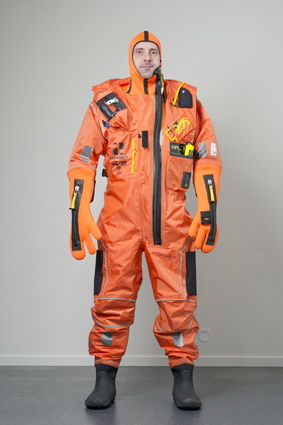 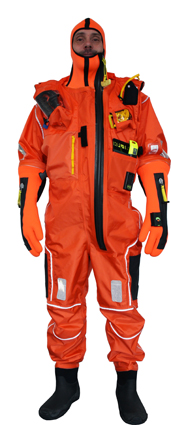
Multiple systems
The beacon is mounted in a bracket in the survival suit. The technology used is not new, but the combination is the first of its kind.
In addition to sending signals over the emergency frequency, it also utilizes AIS, which is an anti-collision system for shipping. The beacon also uses the American GPS satnav system and its Russian equivalent, Glonass.
- Its particularly important in the far north to use the Russian system. This satnav network is located further north and helps make locating a person in distress safer and more accurate, says Asle.
The oil company Eni Norway has already started using the equipment for their workers in the Barents Sea.
- The safety of employees always come first, and as the operator of the first Norwegian oil field to come on stream in the Barents Sea, is important for us to develop customized solutions, says The safety of the employees always come first, and operator of the first Norwegian oil field to come on stream in the Barents Sea, is important for us to develop customized solutions, says HSE Director Liv Nielsen from Eni Norway.
Tested as aircraft components
Hansen Protection has spent double digit millions (NOK) developing the new beacon and advanced new survival suits for the North. The company has worked closely with the oil industry to meet their specific safety requirements.
- Governments, unions and oil companies set very high standards for safety equipment to be used at sea. They have helped to test the equipment. The tests were done in a cold chamber and pools that simulate real-world conditions, such as in the Barents Sea. The equipment is tested as thoroughly as aircraft components, said Knut Åsle.
Hansen Protection worked closely with SINTEF in product development.
The company currently exports survival suits to, amongst others, Canada, China, Russia, Denmark and Germany. The most advanced suits are manufactured at the company's facilities in Moss, while less advanced models are manufactured in the Far East. |
|
|
|
|
|
主站蜘蛛池模板:
亚洲国产精品特色大片观看完整版|
国产精品中文字幕久久|
中国熟女仑乱hd|
强行交换配乱婬bd|
日韩av综合|
无码一区二区三区在|
男人天堂一区|
亚洲av成人精品日韩一区
|
日韩精品无码中文字幕一区二区|
国产精品视频一区二区三区不卡|
国产免费AV片无码永久免费|
午夜成人福利|
开心一区二区三区激情|
国产又黄又爽又不遮挡视频|
无码色偷偷亚洲国内自拍|
成人另类小说|
日韩一区二区三区四区不卡|
五月丁香欧美|
国产成人欧美一区二区三区
|
中文字幕av久久|
zhifusiwa久久乳|
91人妻中文字幕无码专区|
成人国产永久福利看片|
国产乱国产乱老熟300部视频|
国产果冻豆传媒麻婆精东|
国产主播第一页|
四虎成人精品无码永久在线|
和硕县|
欧美精品V欧洲精品|
国产欧美va欧美va香蕉在线观看|
国产在线高清视频无码|
成人亚洲a片v一区二区三区动漫
|
亚洲人成网站在线观看播放不卡|
久久99久久99高清精品免视看|
国内自拍视频一区二区三区|
国产va免费精品观看精品|
精品精品亚洲高清a毛片|
精品熟女999|
国产愉拍精品手机|
国产农村乱子伦精品视频|
亚洲中文字幕乱码免费播放|